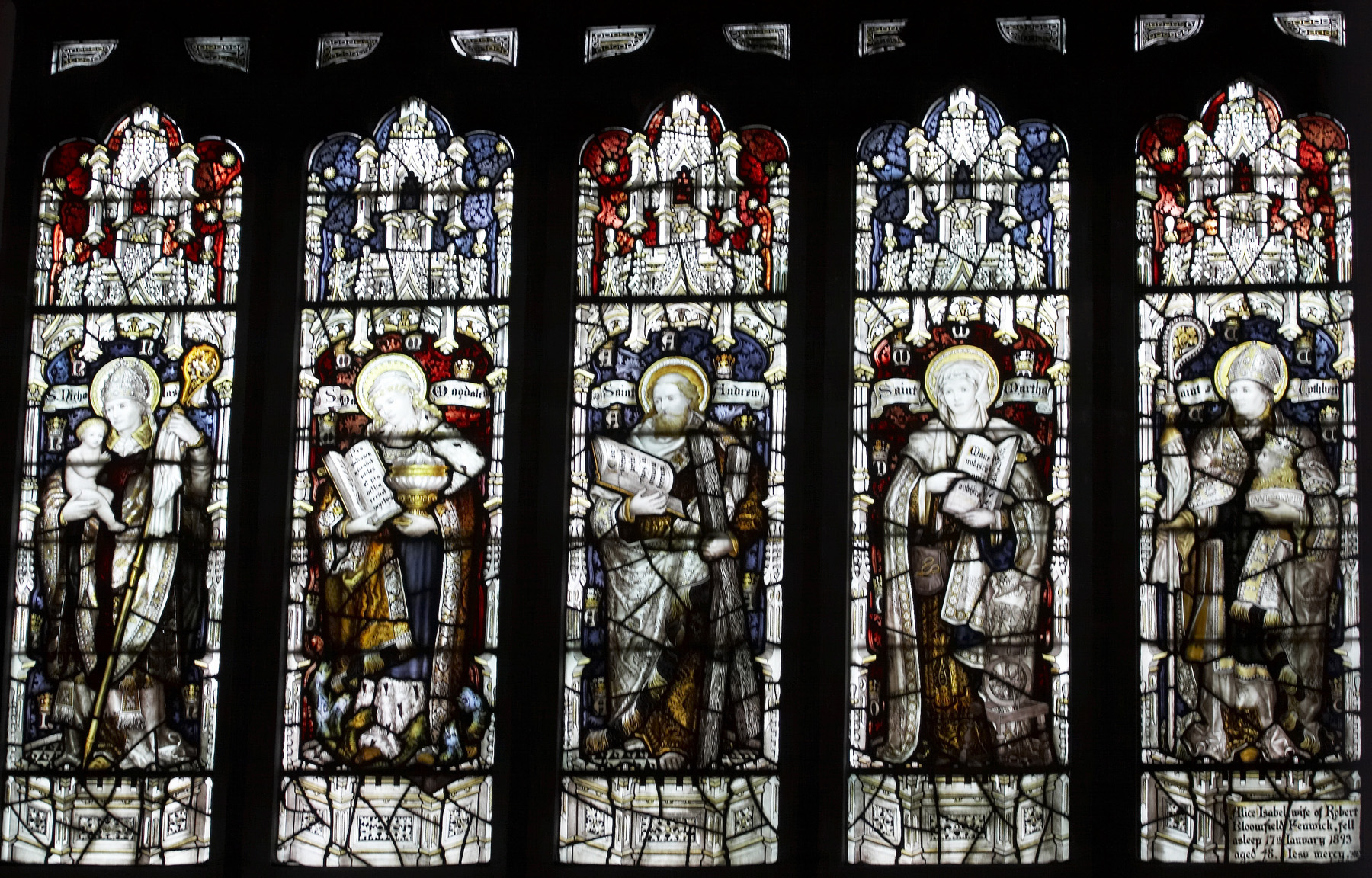
Saints celebrated this week
S. Antony Claret – 24th October
Claret was born at Sallent, near Barcelona (Catalonia) on 23 December 1807, the son of a small woollen manufacturer. He received an elementary education in his native village, and at the age of twelve became a weaver. He was ordained Priest in 1835 and soon became a popular preacher, but his uncompromising preaching gave rise to some hostility. He established the Congregation of the Missionary Sons of the Immaculate Heart of Mary (16 July, 1849), and founded the great religious library at Barcelona which was called “Librería Religiosa” (now Librería Claret), and which has issued several million cheap copies of the best ancient and modern Catholic works. In 1850 he was appointed Bishop of Santiago and spent six years of arduous pastoral work there, during which he antagonised the slave owners and had several attempts made on his life. In February, 1857, he was recalled to Spain by Queen Isabella II, who made him her confessor. He obtained permission to resign his see and was appointed to the titular see of Trajanopolis. His influence was now directed solely to help the poor and to propagate learning; he lived frugally and took up his residence in an Italian hospice. In 1868, revolution forced him to go into exile in France where he died in 1870.
S.S. Simon and Jude – 28th October
Little is known of these two apostles whose names are always linked in the Gospel accounts. Simon is called the Zealot and the most widespread tradition is that after evangelizing in Egypt, he joined Jude in Persia and Armenia, where both were martyred. In art, Simon has the identifying attribute of a saw because he was put to death by a saw. Jude is often shown in icons with a flame around his head. This represents his presence at Pentecost, when he received the Holy Spirit with the other apostles. Occasionally he is represented holding an axe or halberd, as he was brought to death by one of these weapons.

